Your baby will spend many hours sleeping, so a bed is one of the most important things you choose. This guide covers the safe-sleep basics first, then the features that differ between beds.
Safe-sleep basics
Health services such as the NHS give the same core advice for reducing the risk of sudden infant death syndrome (SIDS):
- Put your baby to sleep on their back.
- Use a firm, flat mattress that fits the bed, with a clear sleep space: no pillows, bumpers or soft toys.
- Keep your baby in a cot or Moses basket in your room for the first six months.
- Never sleep with your baby on a sofa or armchair, and avoid overheating.
Always follow the age and weight limits and the instructions supplied with the bed.
Bedside crib, cot or portable bed?
- Bedside crib: sits level with your bed so you can reach your baby for night feeds. Attach it only as its instructions describe.
- Portable or folding bed: moves between rooms on wheels and folds for storage or travel.
- Rocking bed: can soothe your baby. Follow the manual on when to use and lock the rocking feature.
What to check
- Mattress: use the mattress supplied for the bed, with no gaps at the sides.
- Sides: mesh sides let air through and let you see your baby.
- Height: an adjustable height helps a bedside crib line up with your bed.
- Limits: check the maximum age or weight, and move your baby to a larger bed in time.
Baby beds at Kidilo
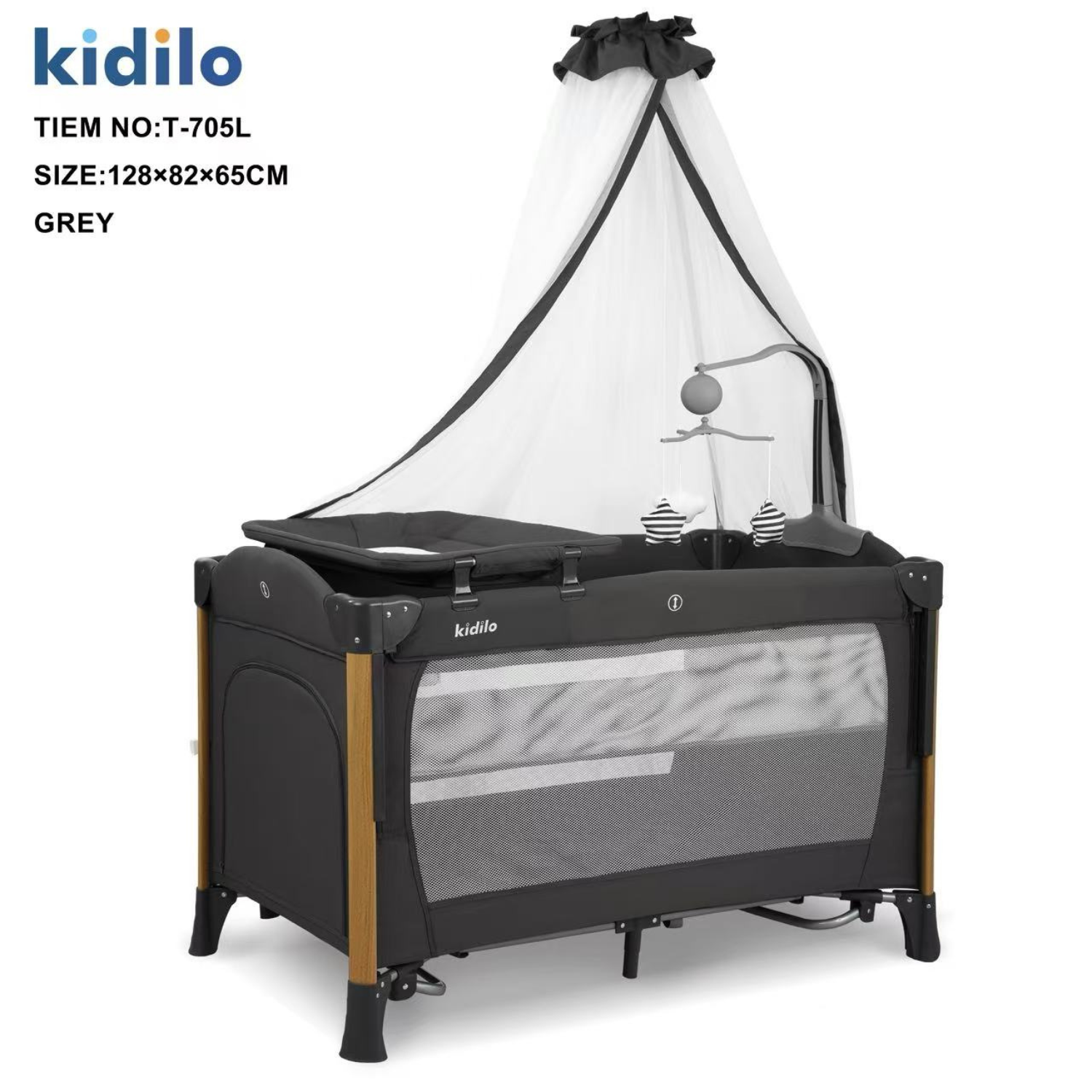
Our baby beds include rocking and folding portable beds such as the Kidilo T-705L with wooden legs, the UP650C and the folding baby bed, plus the PopyPapa playard with a raised bassinet and changing station. Each product page lists its features; ask us if you need the maximum age, weight or mattress size before ordering.
Not sure which one fits? Message us on WhatsApp at +971 50 656 2337 with your child’s age and how you plan to use it. We will check the details with you before you order.